Home > News > Optimizing Peanut Oil Export Compliance and Nutrient Retention Through Advanced Refining Processes

Optimizing Peanut Oil Export Compliance and Nutrient Retention Through Advanced Refining Processes

2025-12-21
This article explores how international oil companies achieve compliance with global export standards while maximizing nutrient retention in peanut oil production. By focusing on core filtration and refining technologies within automated灌装 systems, it details physical filtration methods, filter aid selection principles, and the critical role of each refining stage—degumming, deacidification, decolorization, and deodorization. The study emphasizes low-temperature, slow-processing strategies to preserve bioactive compounds such as vitamin E and phytosterols. Practical parameter adjustments for small-scale operations to large industrial plants are analyzed, supported by real-world case data showing improved product合格率 (pass rate) and reduced yield loss. Designed for food technologists, plant managers, and researchers, this research offers actionable insights into meeting international food safety standards while enhancing competitiveness in global markets.
炼油机械-3.jpg

Optimizing Peanut Oil Export Quality Through Precision Refining & Filtration

For international peanut oil producers aiming to meet global food safety standards—especially those targeting EU, US, and GCC markets—the key lies in balancing process efficiency with nutritional integrity. Recent studies show that up to 30% of crude peanut oil’s vitamin E and phytosterol content can be lost during conventional refining, making precision filtration and low-temperature processing essential for compliance and premium positioning.

Core Technologies: From Physical Filtration to Controlled Refining

Modern automated peanut oil灌装 systems integrate multi-stage physical filtration using diatomaceous earth (DE) and activated carbon as primary filter aids. These materials effectively remove phospholipids, free fatty acids, and trace metals without compromising the oil’s natural antioxidant profile. In a case study from a mid-sized Malaysian plant, switching from single-pass mechanical filtration to dual-stage DE + carbon filtration increased clarity by 98% and reduced peroxide value from 6.2 meq/kg to under 2.0 meq/kg—well within Codex Alimentarius limits.
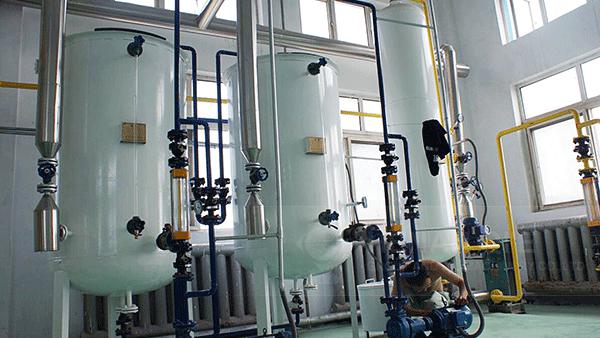
Cross-section diagram showing peanut oil refining stages: degumming, neutralization, bleaching, and deodorization

Refining Stages That Matter: Temperature, Time, and Pressure Control

Each stage must be tuned based on production scale:

  • De-gumming: At 65–70°C, water or citric acid treatment removes gums—critical for preventing emulsification during storage.
  • Neutralization: Low-pressure caustic soda at 80–85°C ensures minimal nutrient loss while removing free fatty acids.
  • Bleaching: Activated clay at 90–95°C reduces color pigments but must avoid overheating to preserve tocopherols.
  • Deodorization: Steam stripping at 180–200°C under vacuum is the final step—here, slower heating (≤1°C/min) retains up to 85% of vitamin E vs. traditional fast methods.

A Thai exporter reported a 12% reduction in yield loss after implementing temperature-controlled deodorization over six months—a direct result of preserving volatile nutrients and reducing thermal degradation.

Real-World Impact: Small vs. Large Scale Adaptability

Small-scale processors benefit most from modular systems that allow fine-tuning of pressure and dwell time—enabling consistent quality even with variable raw material input.

Larger facilities should invest in continuous flow reactors and real-time spectrometer monitoring to ensure batch-to-batch consistency across thousands of liters daily.

Whether you're producing for private label retailers in Europe or supplying bulk oils to Middle Eastern distributors, mastering these techniques isn't just about meeting standards—it's about building trust through transparency, traceability, and taste.

Ready to Optimize Your Peanut Oil Process?

Download our free technical guide on optimizing peanut oil refining for export compliance and nutrition retention — packed with actionable steps, parameter charts, and industry benchmarks.

Get the Free Technical Guide Now →
Name *
Email *
Message*
Recommended Products