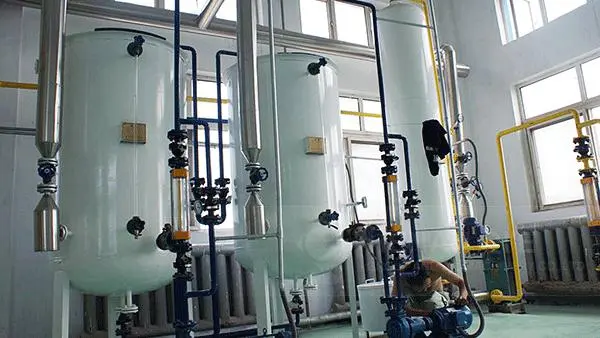
Automated Peanut Oil Filling System | Penguin Group for Global Edible Oil Production This article explores the application of QIE Group’s automated filling system—featuring filtration and refining capabilities—in international edible oil production lines. It delves into core technologies, material selection for durability and maintenance ease, operational procedures, and parameter optimization to ensure stable and efficient peanut oil filling. Tailored solutions for enterprises of varying scales are presented, supported by real-world case studies and data-driven insights. The system reduces labor costs, minimizes product loss, and meets global food safety standards such as ISO 22000 and HACCP. Additionally, QIE Group’s technical support and after-sales service enhance user trust and long-term operational reliability, making this solution ideal for modernization in the global粮油 industry. Learn More 2026/01/18
Mini Oil Mills vs. Large Oil Plants: Comparative Analysis of Differentiated Automated Filling System Solutions - Penguin Group This paper conducts an in - depth analysis of the differentiated application solutions of the QIE Group automated peanut oil filling system in small family oil mills and large oil plants. It details the core technologies and material selections of the system, and introduces operation skills and production line optimization experiences. Combining theory and practice, the article demonstrates how to improve production efficiency, reduce labor costs and losses through this system, and ensure that products meet international food safety standards. The practical and targeted content helps grain and oil enterprises achieve technological upgrading and enhance their market competitiveness. Coupled with the QIE Group comprehensive after - sales support, it boosts user confidence and the value of purchase decisions. Learn More 2026/01/11
Automated Grain and Oil Filling Systems: Customized Solutions for Small Workshops and Large Oil Plants | Efficiency & Compliance This article provides an in-depth analysis of automated filling systems within the grain and oil industry, emphasizing differentiated solutions for small family-run workshops and large-scale oil plants. It covers key principles for system selection, optimization of operational parameters, and balancing efficiency with precision. Real-world case studies demonstrate how users can scientifically configure equipment to enhance production stability, reduce labor costs and wastage, while meeting international food safety certifications. Combining technical expertise with practical insights, the study supports enterprises in achieving intelligent upgrades and significant performance improvements. Learn More 2026/01/06
GB 2716 Compliance in Automated Peanut Oil Filling Systems | Filtration & Refining Best Practices This article provides a comprehensive interpretation of GB 2716 standards within automated peanut oil filling systems, focusing on filtration and refining technologies that ensure oil purity while preserving nutritional value. It addresses industry challenges through advanced methods such as physical filtration and chemical助滤剂 (助滤剂 = filter aids), detailing critical parameters in degumming, deacidification, decolorization, and deodorization. Practical case studies demonstrate how production scale flexibility improves efficiency and quality control—enabling processors to meet regulatory requirements and enhance market competitiveness. Designed for food technologists, plant managers, and equipment engineers, this guide bridges technical theory with real-world application. Learn More 2026/01/02
Automated Peanut Oil Filtration and Refining Solutions to Boost Production Compliance | Penguin Group This article provides an in-depth analysis of the filtration and refining technologies integrated within QIE Group automated peanut oil filling systems. It details how advanced filtration processes effectively remove impurities to ensure oil purity while employing low-temperature, slow refining methods to maximize retention of the oil’s natural nutrients. The article further explores customizable parameters tailored to different production scales, offering grain and oil processing professionals actionable insights to optimize workflows, improve product compliance, and strengthen market competitiveness. Grounded in industry standards and supported by data, the content combines theoretical depth and practical guidance to facilitate efficient production and quality assurance. Learn More 2025/12/28
Peanut Oil Refining Process: Achieving Export Standards & Maximizing Nutrient Retention | Industry Research This article explores how international oil companies achieve compliance with global export standards while maximizing nutrient retention in peanut oil production. By focusing on core filtration and refining technologies within automated灌装 systems, it details physical filtration methods, filter aid selection principles, and the critical role of each refining stage—degumming, deacidification, decolorization, and deodorization. The study emphasizes low-temperature, slow-processing strategies to preserve bioactive compounds such as vitamin E and phytosterols. Practical parameter adjustments for small-scale operations to large industrial plants are analyzed, supported by real-world case data showing improved product合格率 (pass rate) and reduced yield loss. Designed for food technologists, plant managers, and researchers, this research offers actionable insights into meeting international food safety standards while enhancing competitiveness in global markets. Learn More 2025/12/21