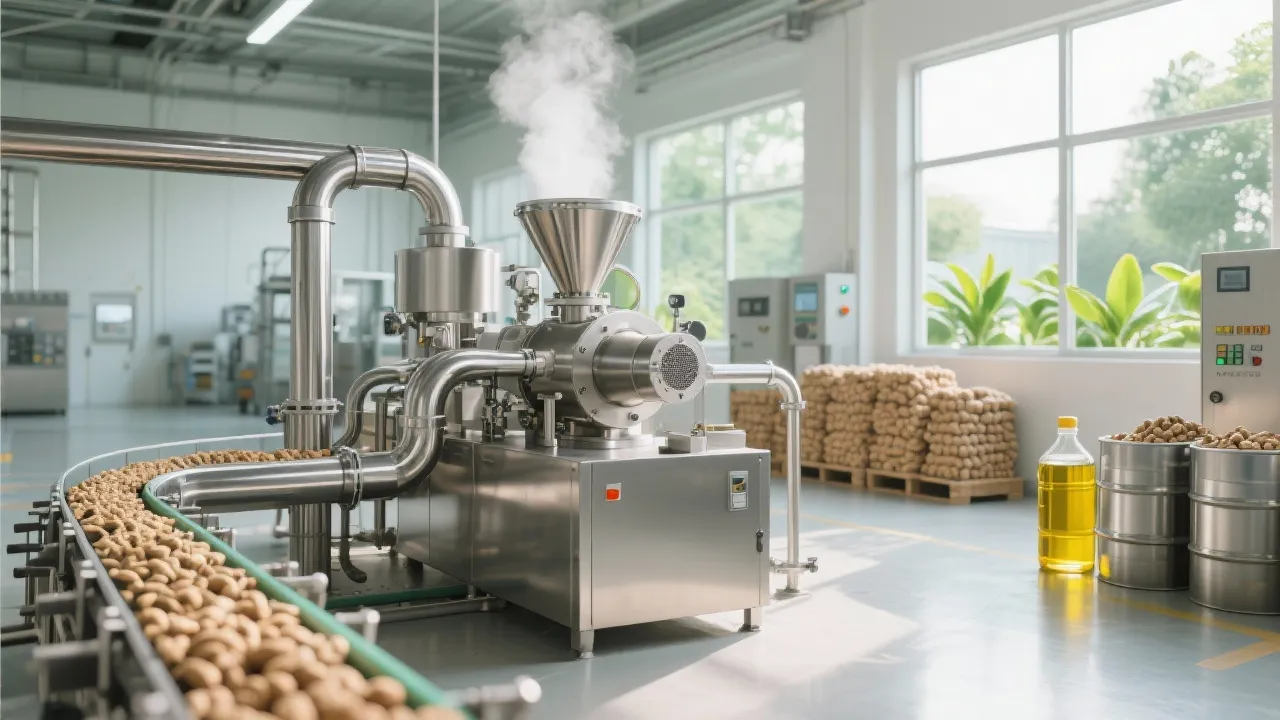
Automated Peanut Oil Filling & Filtration Systems | Improve Quality & Export Compliance Discover how modern automated peanut oil filling systems integrate centrifugal filtration and membrane purification to remove impurities while preserving nutrients via low-temperature refining. This article breaks down key processes—such as degumming, deacidification, decolorization, and deodorization—and explains how adjustable parameters for different production scales improve product quality and compliance with GB 2716 standards. Real-world case data shows measurable gains in yield, purity, and export readiness. Learn why leading oil producers are adopting this system—and how you can too. Learn More 2026/01/03
Smart Automated Peanut Oil Filling System | Improve Yield & Compliance | ISO-GMP Ready Discover how advanced filtration and refining technologies in automated peanut oil filling systems effectively remove impurities while preserving nutritional value. This article explains the principles of physical filtration (e.g., centrifugal and membrane methods) and scientific refining processes (degumming, deacidification, decolorization, and deodorization), with precise parameter control tailored to both small-scale and large-scale production needs. Backed by real-world case data—such as a 25% increase in product compliance rate and 15% reduction in oil loss—this solution addresses common challenges like inconsistent taste and non-compliance with GB 2716 food safety standards. Learn why more global edible oil manufacturers are adopting intelligent automation for stable, high-quality output. Learn More 2025/12/24
Cold-Press Expeller Press Features & Global Procurement Tips | Vegetable Oil Processing Guide Confused about choosing between hot pressing and cold pressing for vegetable oil extraction? Hot pressing offers higher efficiency but weaker flavor, while cold pressing preserves nutrients—yet demands precise equipment. This guide breaks down the core differences, explains how to match each method to specific oils like rapeseed or soybeans, and shares energy-saving tips from real-world operations. Learn how to optimize yield and quality with practical insights from field engineers—and prepare for future upgrades in press technology. Ideal for plant managers and procurement officers seeking smarter, greener processing solutions. Learn More 2025/11/09
Easy-Maintenance Hydraulic Oil Press Machines | Reliable After-Sales Service for Stable Production Discover how selecting easy-maintenance hydraulic oil press machines coupled with professional after-sales support can significantly enhance your production line’s stability and economic performance. This article details essential daily maintenance practices, including hydraulic system inspections, lubrication management, and seal replacement, while highlighting the benefits of robust machine design and energy-efficient features. Designed for oil mill managers and equipment operators, it provides practical strategies to minimize downtime, reduce repair costs, and achieve sustained, efficient production. Learn More 2025/10/30
Compact Oil Presses for Home Use: Why Overseas Buyers Prefer Them | Efficient & User-Friendly Oil Makers The rising preference for compact oil presses among overseas buyers is driven by their space-saving design ideally suited for home kitchens, user-friendly operation enabling beginners to easily extract oil, and efficient, stable oil yield that meets daily health requirements. Coupled with international quality certifications such as ISO9001, these home oil makers ensure safety and reliability. This article offers an in-depth analysis of the core advantages of compact oil presses, helping global consumers make informed purchase decisions that enhance their cooking experience and overall quality of life. Learn More 2025/09/16