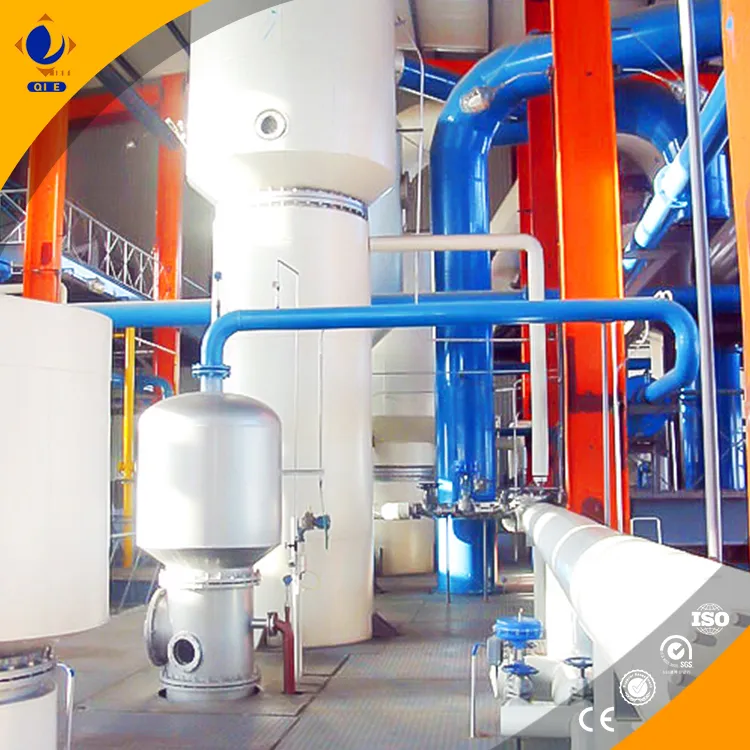
How Grain and Oil Enterprises Ensure Peanut Oil Meets International Food Safety Standards with Automated Filtration How can grain and oil enterprises ensure that peanut oil meets international food safety standards through automated filtration technology? This article delves into the core filtration and refining processes in the automated peanut oil filling system, covering the full - process control from impurity removal to nutrient retention. It helps small workshops and large oil mills scientifically optimize production parameters, enhance product qualification rates and market competitiveness. Combining GB 2716 and ISO standards, it provides practical technical guidance to assist enterprises in achieving efficient, compliant, and high - quality oil production. Learn More 2025/12/08
Optimizing Filtration and Refining Parameters for Automated Peanut Oil Production Efficiency | Qe Group This article provides an in-depth analysis of the core technologies in Qe Group's automated peanut oil filling system, focusing on filtration and refining techniques. It elaborates on how flexible adjustment of filtration and refining parameters can effectively remove impurities while preserving the natural nutrients of peanut oil, achieving simultaneous improvements in production efficiency and product quality. Addressing industry challenges and real-world case studies, this content offers scientific technical guidance and practical insights for food processing technology leaders and equipment selection engineers, supporting enhanced competitiveness and compliance in peanut oil production lines. Learn More 2025/12/07
Peanut Oil Refining Process Guide | Key Parameters for Degumming, Deacidification & More This article offers an in-depth analysis of the critical filtration and refining technologies within the automated peanut oil filling systems employed by QIE Group. It thoroughly details the full refining process, including degumming, deacidification, decolorization, and deodorization, focusing on essential process parameters. By integrating advanced techniques and adaptable control strategies, the guide supports grain and oil processing enterprises in optimizing production workflows, enhancing oil purity and nutrient retention, and achieving a balance between operational efficiency and product quality. It aims to provide scientific guidance that strengthens market competitiveness and ensures compliance with food safety standards. Learn More 2025/12/06
Filtration Technologies in Automated Peanut Oil Filling Systems | Enhancing Oil Quality & Refining Insights This article explores the critical role of filtration technologies within automated peanut oil filling systems, detailing how precise removal of impurities enhances oil purity and stability. It also examines the refining processes essential for preserving the natural nutritional components of peanut oil. Beginning with prevalent industry challenges such as residual impurities and nutrient loss, the discussion covers core filtration methods including centrifugal separation, membrane filtration, and the synergistic use of chemical filter aids. Additionally, it breaks down the four key refining stages—degumming, neutralization, bleaching, and deodorization—highlighting their influence on flavor and nutrition retention. Parameter adjustment strategies tailored for small-scale workshops and large-scale factories in terms of temperature, pressure, and processing time are analyzed. Real-world case studies demonstrate significant improvements in product acceptance rates (up by X%) and reduction in material loss. The article concludes by encouraging professionals to obtain a comprehensive operation manual or schedule expert consultation to achieve quality upgrades and regulatory compliance. Learn More 2025/12/05
High - efficiency Vegetable Oil Presses: Selection Tips and Process Insights for Diverse Raw Materials This article delves deeply into the two core processes in vegetable oil pressing - hot pressing and cold pressing. It elaborately introduces their principles, operation procedures, and impacts on oil quality, assisting technical leaders and procurement decision - makers in processing plants to scientifically select appropriate processes for various raw materials such as soybeans and rapeseeds. The article also incorporates the concept of energy conservation and environmental protection, offering energy - saving operation tips and equipment selection suggestions to help enterprises achieve process upgrades that balance output and quality, thereby enhancing processing efficiency and market competitiveness. Learn More 2025/12/04
Cold Pressing vs Hot Pressing in Vegetable Oil Production | Process Optimization Guide 2025 This article provides a comprehensive analysis of two core vegetable oil extraction methods—cold pressing and hot pressing—detailing their principles, operational workflows, and impacts on oil quality. By examining the characteristics of key raw materials such as soybeans and rapeseed, it outlines strategic process selection criteria that balance yield with flavor retention and nutritional value. Practical insights into energy-efficient equipment use, environmental best practices, and real-world success and failure cases from plant engineers are included to guide technical managers and procurement decision-makers. The piece also highlights emerging trends in cold-press technology and offers tools for data-driven process optimization, helping manufacturers improve product quality, reduce waste, and strengthen market positioning. Learn how to choose the right press machine → Download the Cold Pressing Operations Manual. Learn More 2025/12/03